Winter is when Mt. Fuji is most visible. What you can photograph from December to February, the spots we use, and how to stay warm at 1,000 m.
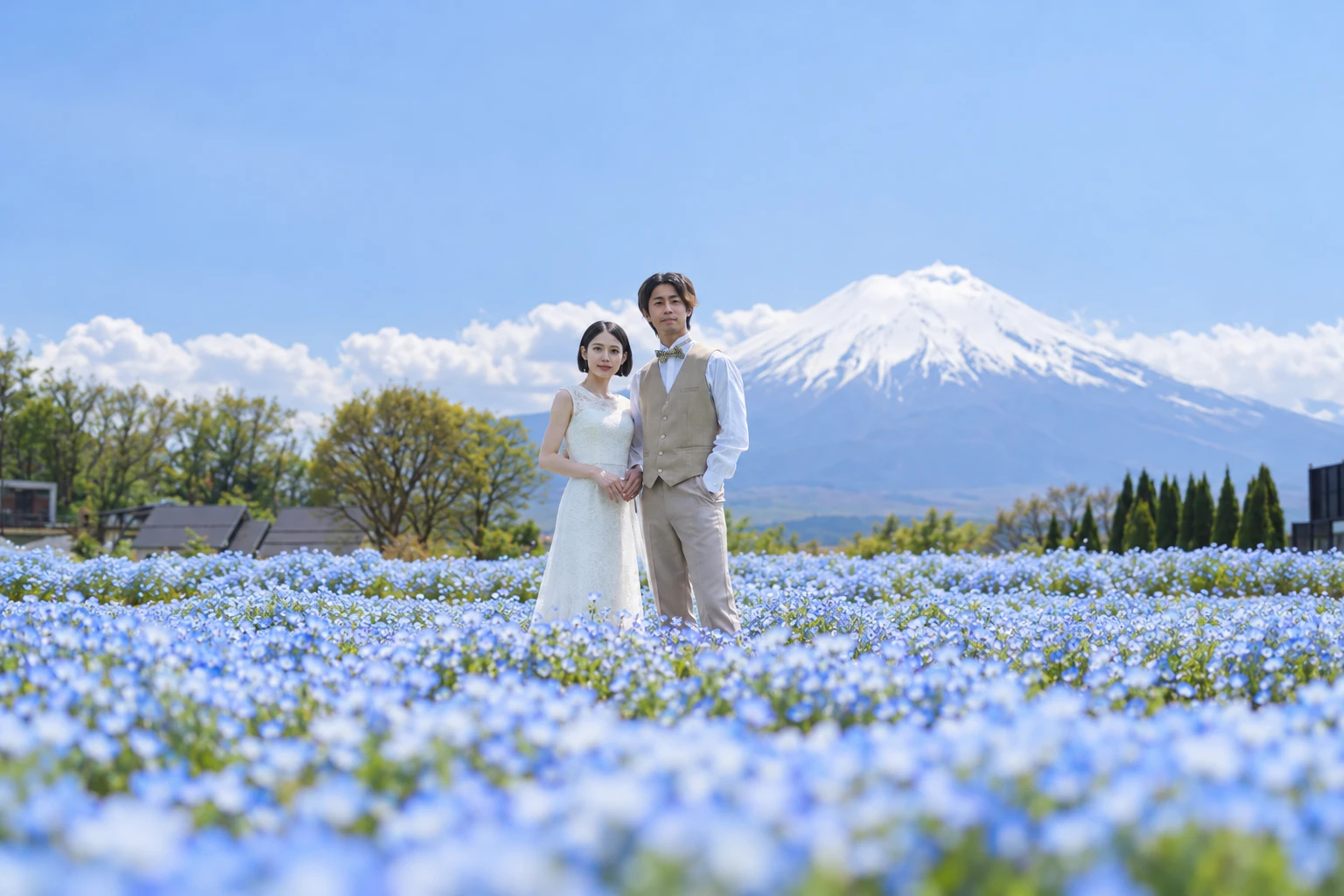
Most couples picture a Mt. Fuji photoshoot in a flower field or among fresh green leaves. But if what you want is the mountain itself, sharp and snow-capped, winter is the season. The air is clear, and on most mornings every ridge of a snow-covered Fuji stands out against the sky. This guide covers what you can photograph in winter, which spots we use, and the cold-weather and daylight details to plan for. The Mt. Fuji tour runs all winter, December to February.
Winter is when Mt. Fuji is most visible
Fuji City's long-term record of whether the mountain is visible at 8 a.m. shows winter as the clearest time of year.
| Period | Days with the whole mountain visible (8 a.m.) |
|---|---|
| December | about 62% |
| January | about 60% |
| June to August | about 10–15% |
In winter a dry wind blows down from the mountain, so cloud rarely forms on Fuji. If you are coming all this way to photograph the mountain, winter gives you the best odds. The season-by-season picture is in When to take Mt. Fuji pre-wedding photos.
What you can photograph in winter
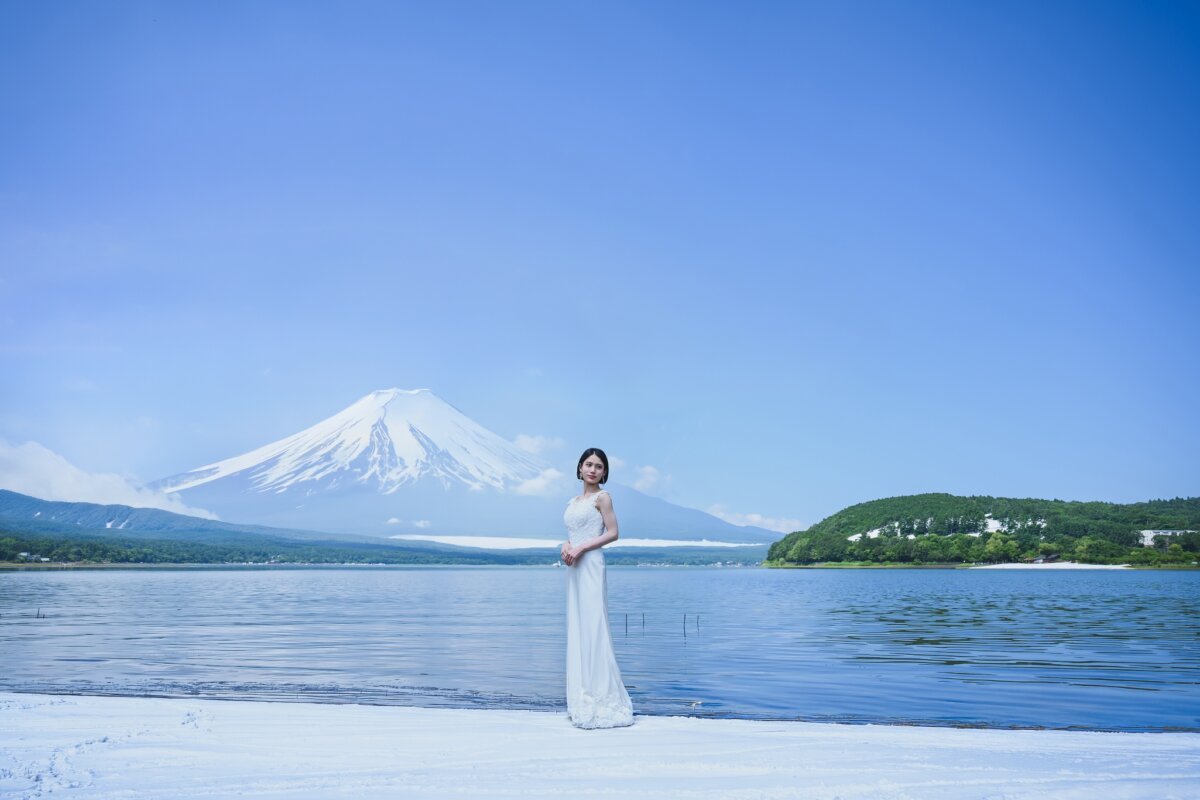
A snow-capped Mt. Fuji
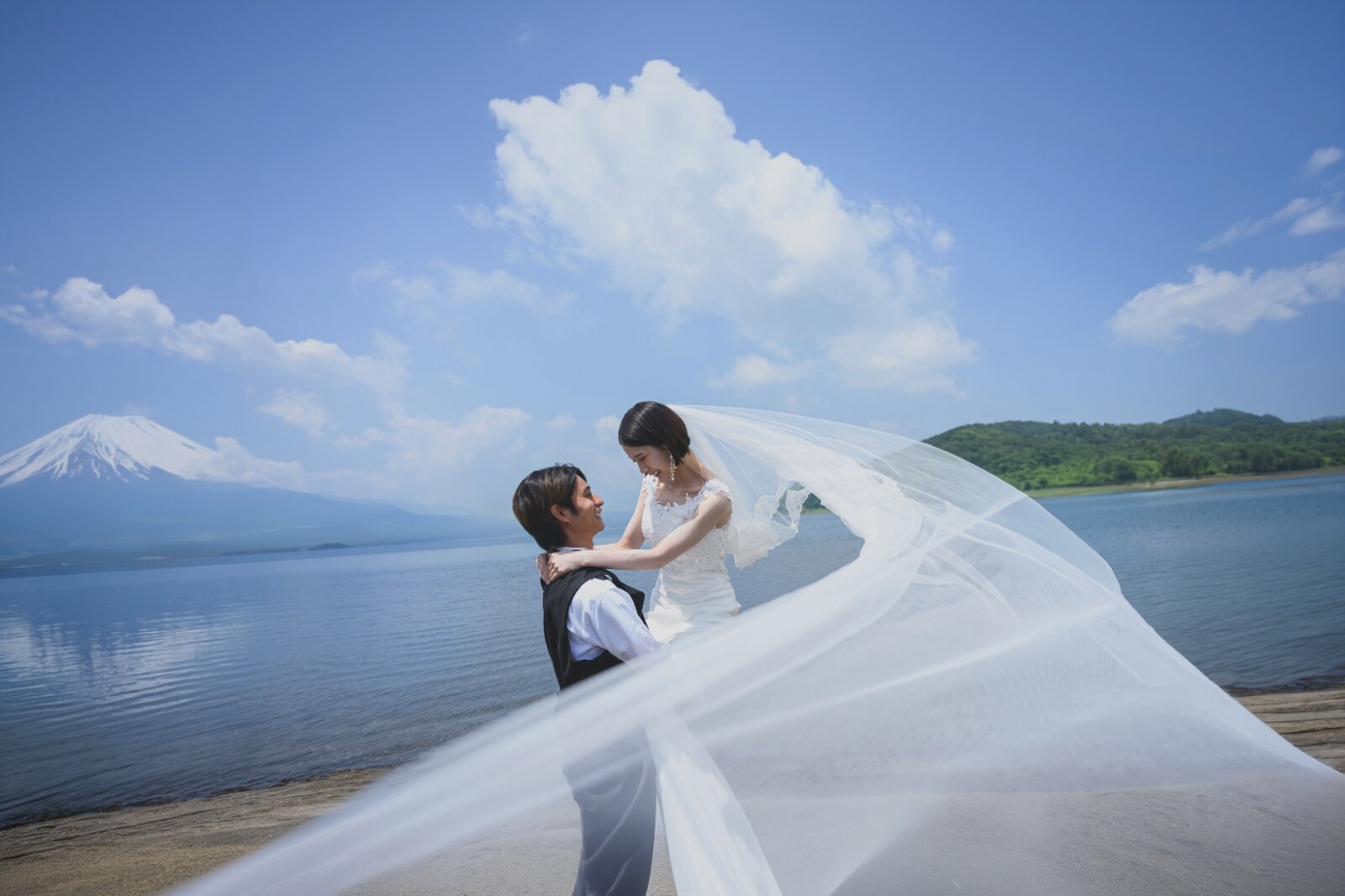
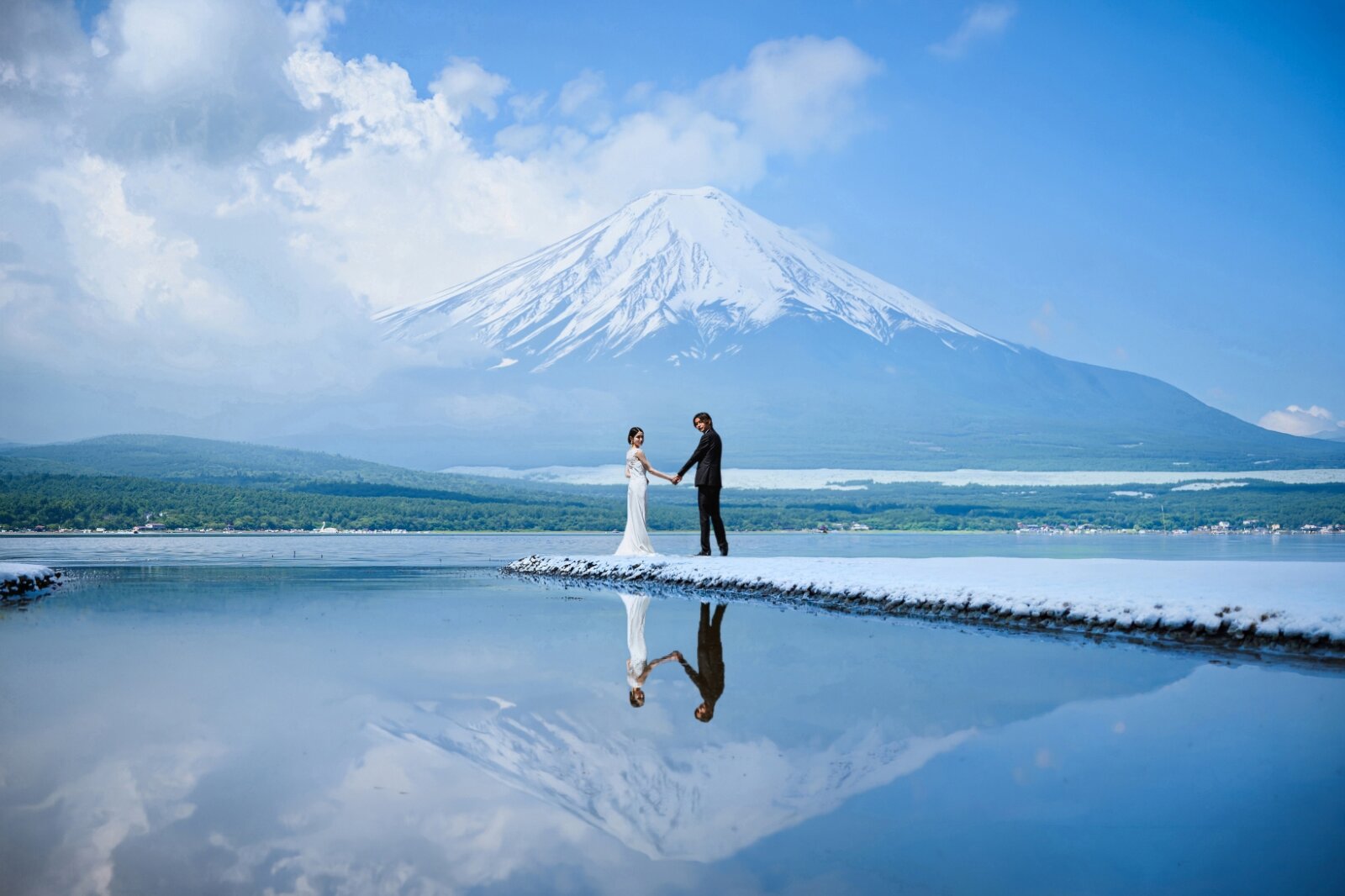
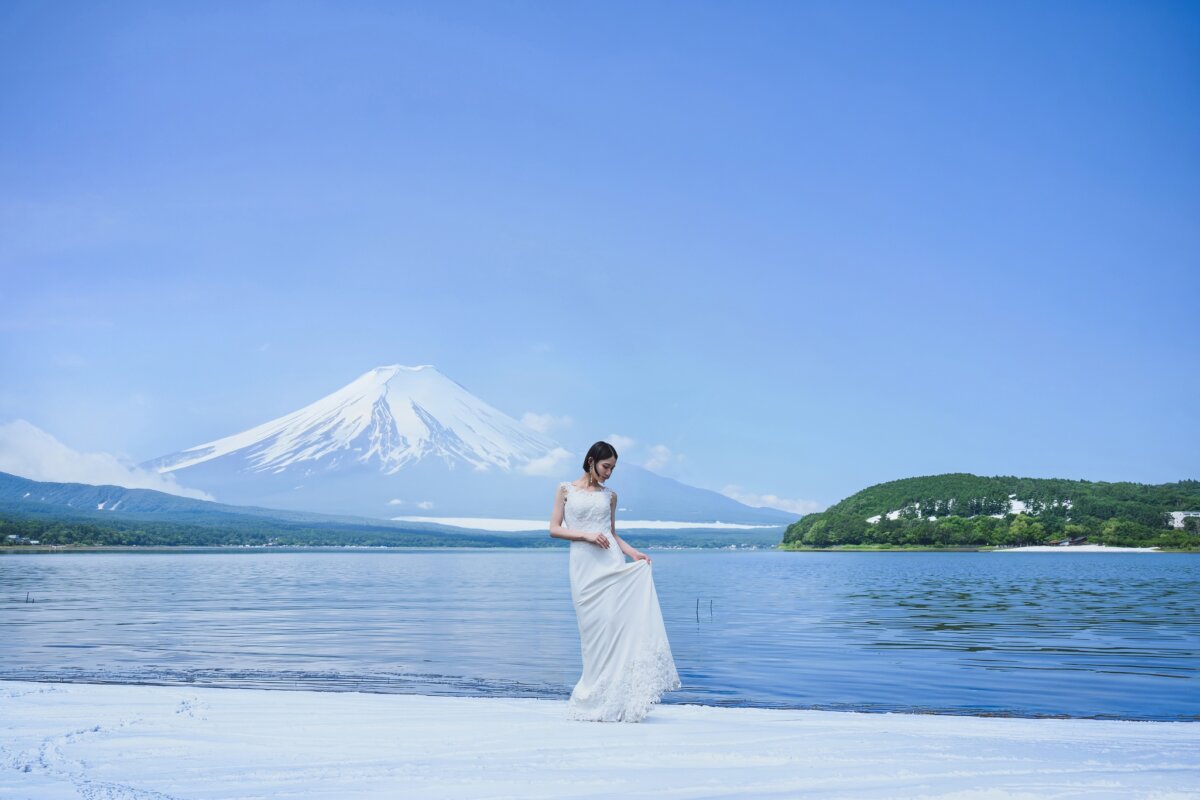
In winter the mountain wears snow from the summit far down its slopes. The contrast of blue sky and white mountain is crisp, and a white wedding dress sits naturally in the same palette.
A snow-edged lakeshore
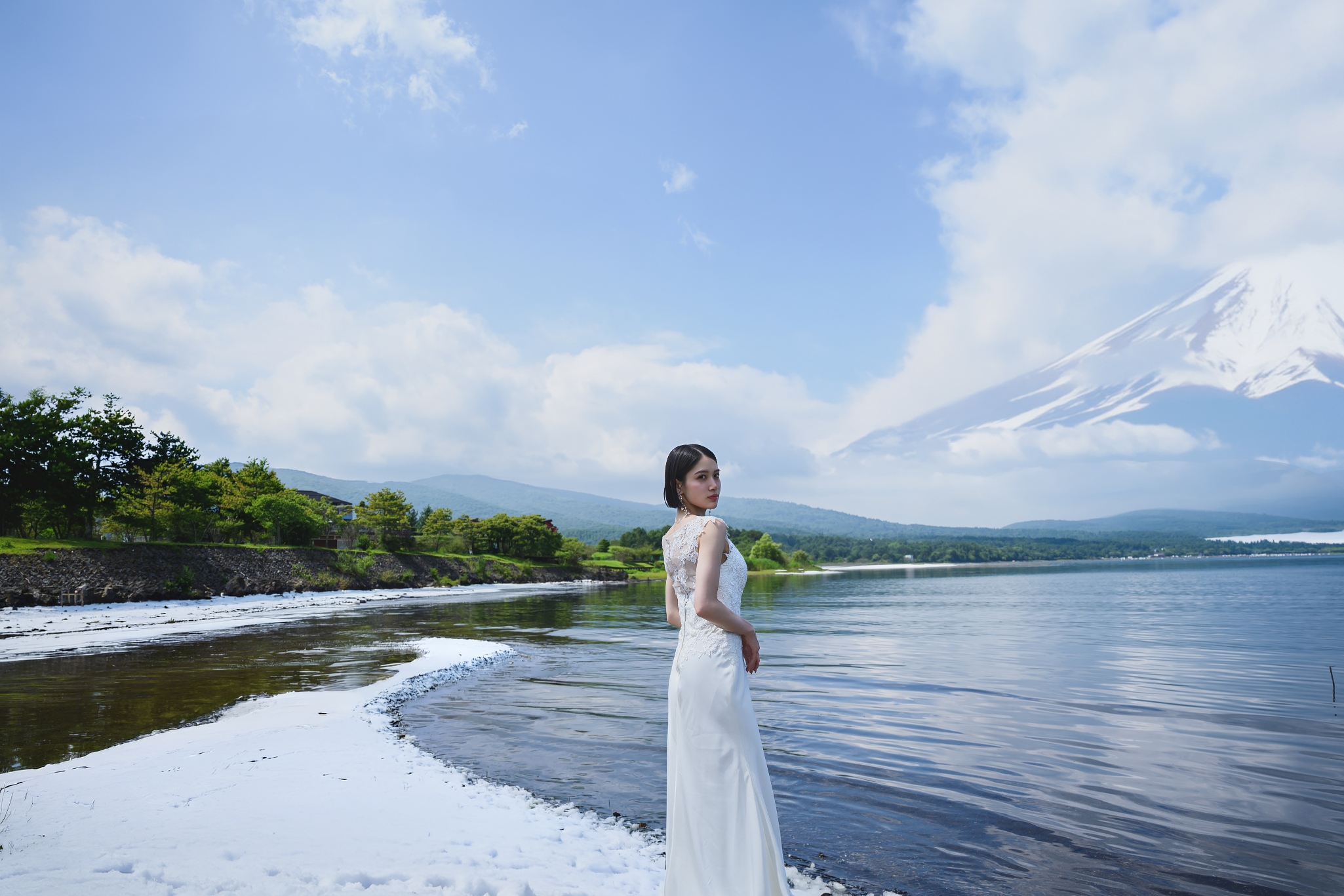
After snowfall the shore of Lake Yamanaka is edged in white. The blue of the lake, the white of the snow and the mountain in one frame is a composition you get only in winter. How much snow lies on the ground depends on the weather in the days before your shoot.
Clear air and low winter light
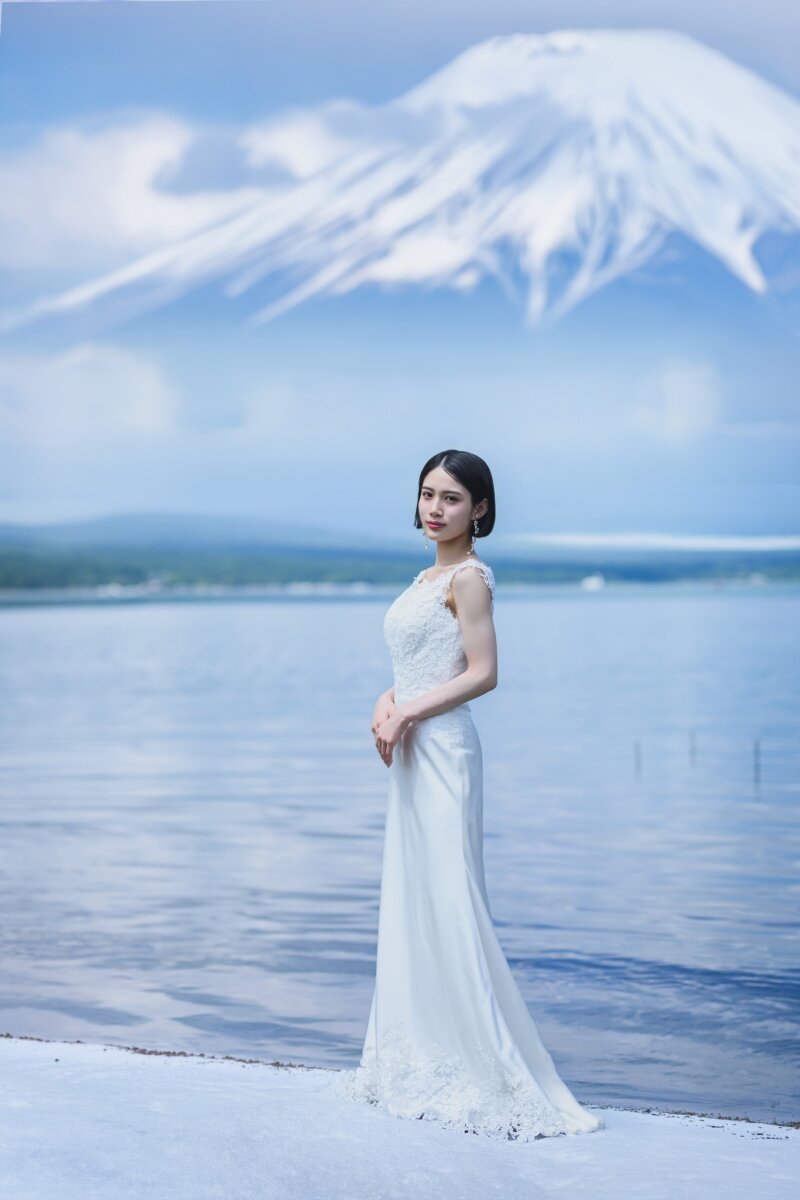
Winter air is exceptionally transparent, so distant ridgelines come out sharp. The sun stays low, which gives soft, flattering light through the afternoon.
The season of "Diamond Fuji"
On certain winter evenings around Lake Yamanaka the setting sun lines up exactly with the summit, a sight the Japanese call Diamond Fuji. It happens only on a few days, at specific spots, and only in clear weather, so it is not something we can promise on a shoot, but it is one of the pleasures of a winter visit.
Where we shoot in winter
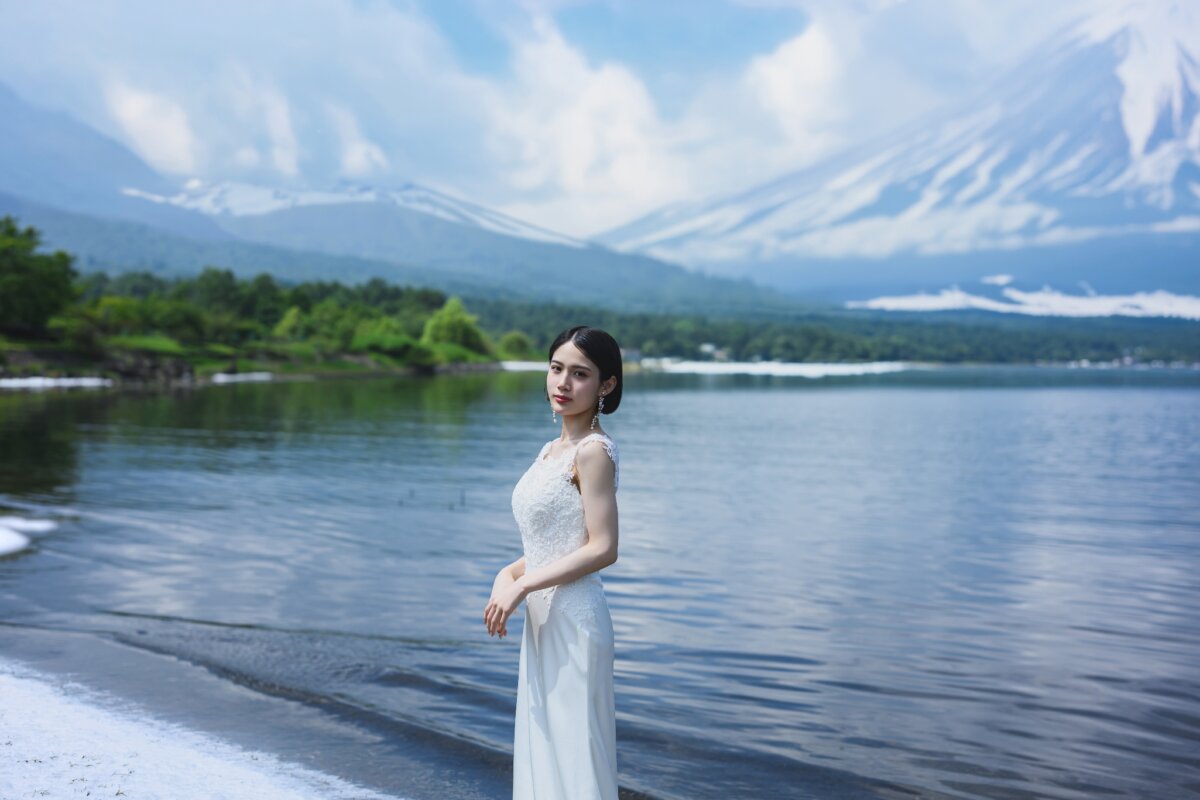
The tour visits the same two locations as in other seasons, Lake Yamanaka and Hana no Miyako Park. Here is what each offers in winter.
| Spot | Winter highlights |
|---|---|
| The lakeshore | A snow-capped Fuji over the lake; a snow-edged shore after snowfall |
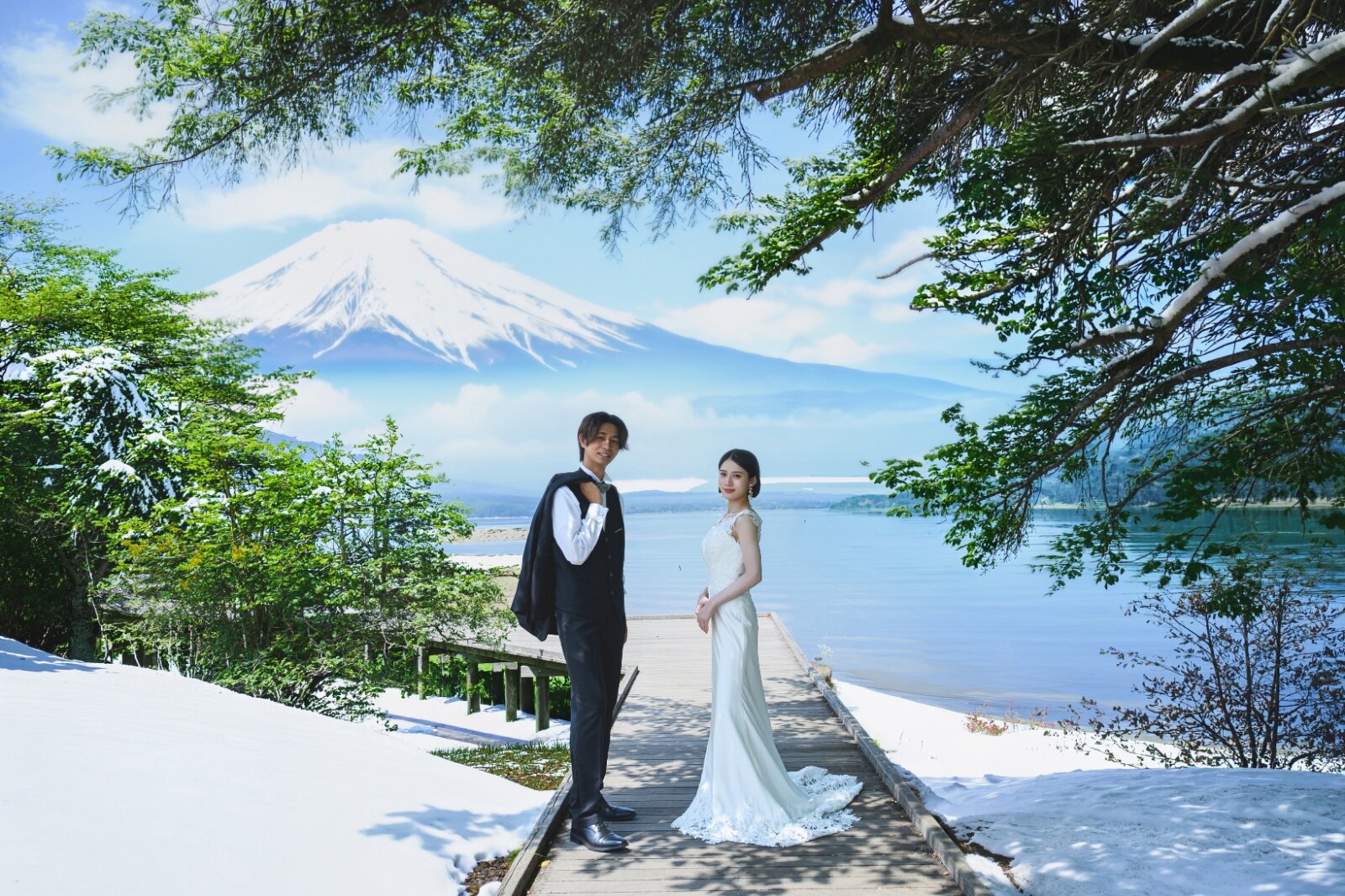
| The boardwalk and woods | Snow lingering on the boardwalk, the mountain glimpsed between bare branches |
| Hana no Miyako Park | Few flowers in the fields, but the willow path, the open lawn and the garden terrace all work |
Hana no Miyako Park in winter: from 16 October to 15 April the park opens 9:00–16:30, and from 1 December to 15 March it closes on Tuesdays (except public holidays). We schedule the day around this once your date is fixed.
What to plan for
The cold
Lake Yamanaka sits at about 1,000 m and winter mornings and evenings often fall below freezing. Keep warm between shots and during the drive. Our cold-weather guide has the details.
- A front-opening coat or cardigan you can take on and off without disturbing your hair
- A large shawl or lap blanket
- Adhesive heat packs, placed at the waist or stomach where they do not show through the outfit
- Warm socks and comfortable shoes for walking
- A flask of something hot
Choosing an outfit
Dresses with an open back or bare shoulders let the cold in. Tell our stylist at the fitting that you are shooting Mt. Fuji in winter and they will suggest designs and layers that suit the season. A kimono, worn in several layers, is noticeably warmer than a dress. See the Dress & Kimono page.
Early sunset
Winter days are short and the bright evening hours end early. We set the shooting times to the season, so check the schedule once your date is confirmed.
Snow days
It does snow at Lake Yamanaka. We shoot as planned on a snowy day; only in severe weather such as a heavy snowstorm do we reschedule, free of charge. Rain days can also be rescheduled free of charge by contacting us before noon the day before.
Questions about winter shoots
Does the tour run in winter?
Yes. The Mt. Fuji Two-Location Tour runs from December to February.
Are snow-scene photos guaranteed?
Snow on the shore depends on the weather in the days before. Even without snow on the ground, winter is the easiest season to photograph a snow-capped Fuji.
What happens if it snows on the day?
We shoot as planned. In severe weather such as a heavy snowstorm, you can reschedule free of charge.
Can we still shoot in the flower park?
Yes. There are few flowers in winter, so we use the willow path, the open lawn and the garden terrace instead.
What if Mt. Fuji is behind clouds?
The Mt. Fuji Special Retouch restores the mountain to your favourite 10 photos free of charge. See What if Mt. Fuji is hidden by clouds?
How cold does it get?
Often below freezing in the morning and evening. A front-opening layer, a shawl, heat packs and warm socks make the day comfortable.
A snow-capped Fuji and a lakeshore in crisp winter air: a scene you can photograph in no other season. The plan and the day's schedule are on the Mt. Fuji Two-Location Tour page.
Ask us about your Mt. Fuji photoshoot
Send your travel dates and the look you have in mind. We reply in English by email, with no obligation.