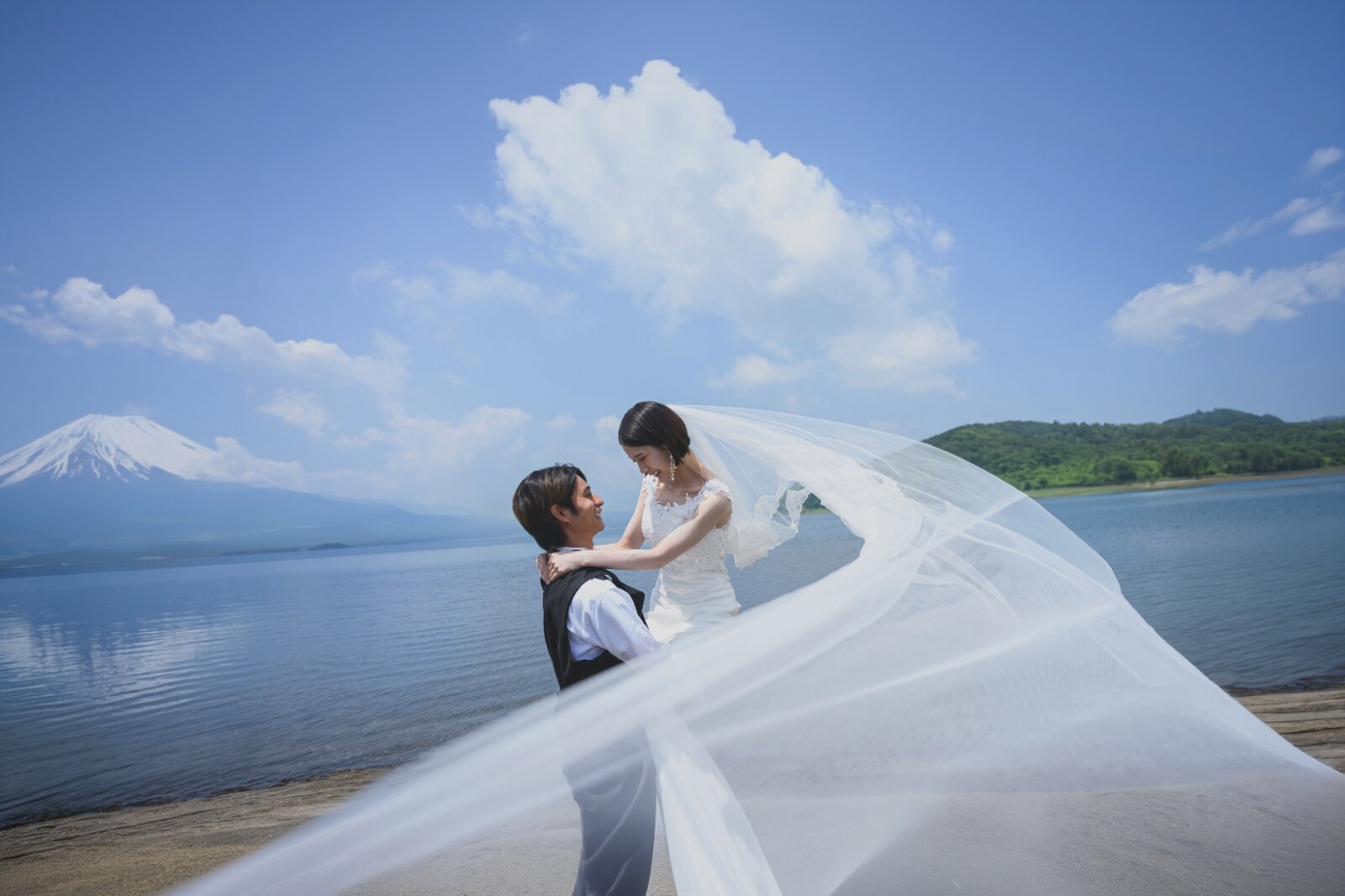
Lake Yamanaka is 5–6°C cooler than Tokyo. How to stay warm in a dress or a kimono, season by season, and what to bring.
Lake Yamanaka, where the Mt. Fuji tour shoots, is the highest of the Fuji Five Lakes: the water sits at about 980 m above sea level. If you dress as you would for a day in Tokyo, you will feel colder than you expect. This guide covers how to stay warm in a dress or a kimono, and what to bring.
Count on 5–6°C colder than Tokyo
Temperature drops by about 0.6°C for every 100 m of altitude, so at roughly 1,000 m Lake Yamanaka is about 5–6°C cooler than central Tokyo. Its average annual temperature is close to that of Hokkaido, Japan's northern island. Even in summer the mornings and evenings are cool, and in winter it often drops below freezing.
On the tour you get dressed at our Yokohama or Nagoya studio before departure. Do not judge the day by the temperature at the studio; assume the lake will be a little colder than you expect.
| Season | Conditions at the lake | Good to have |
|---|---|---|
| Spring (Apr–May) | Cold mornings and evenings; the wind off the lake feels chilly | A layer, a shawl |
| Summer (Jun–Aug) | Warm days; cool mornings and evenings | A light layer, sunscreen |
| Autumn (Sep–Nov) | Mornings and evenings turn sharply colder | A coat, heat packs |
| Winter (Dec–Feb) | Often below freezing in the morning and evening | A heavy coat, heat packs, a lap blanket |
A layer for the drive and the breaks
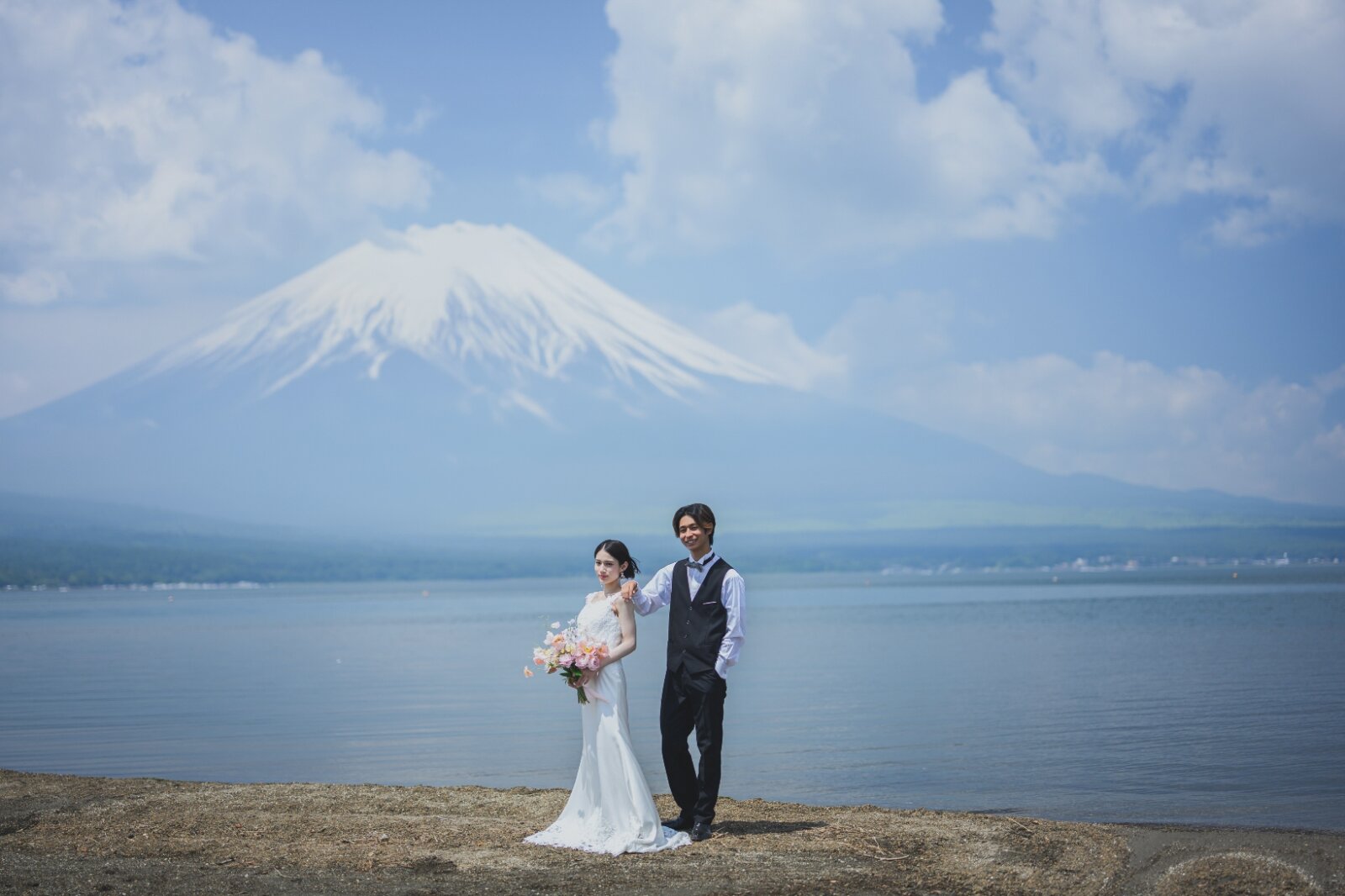
Bring one layer you can put on between shots and in the car. So that it goes on and off without disturbing your hair and makeup, choose a front-opening cardigan or coat, or a large shawl, rather than anything you pull over your head. A coat worn over the dress is fine; we take it off just before each shot.
Staying warm in a dress
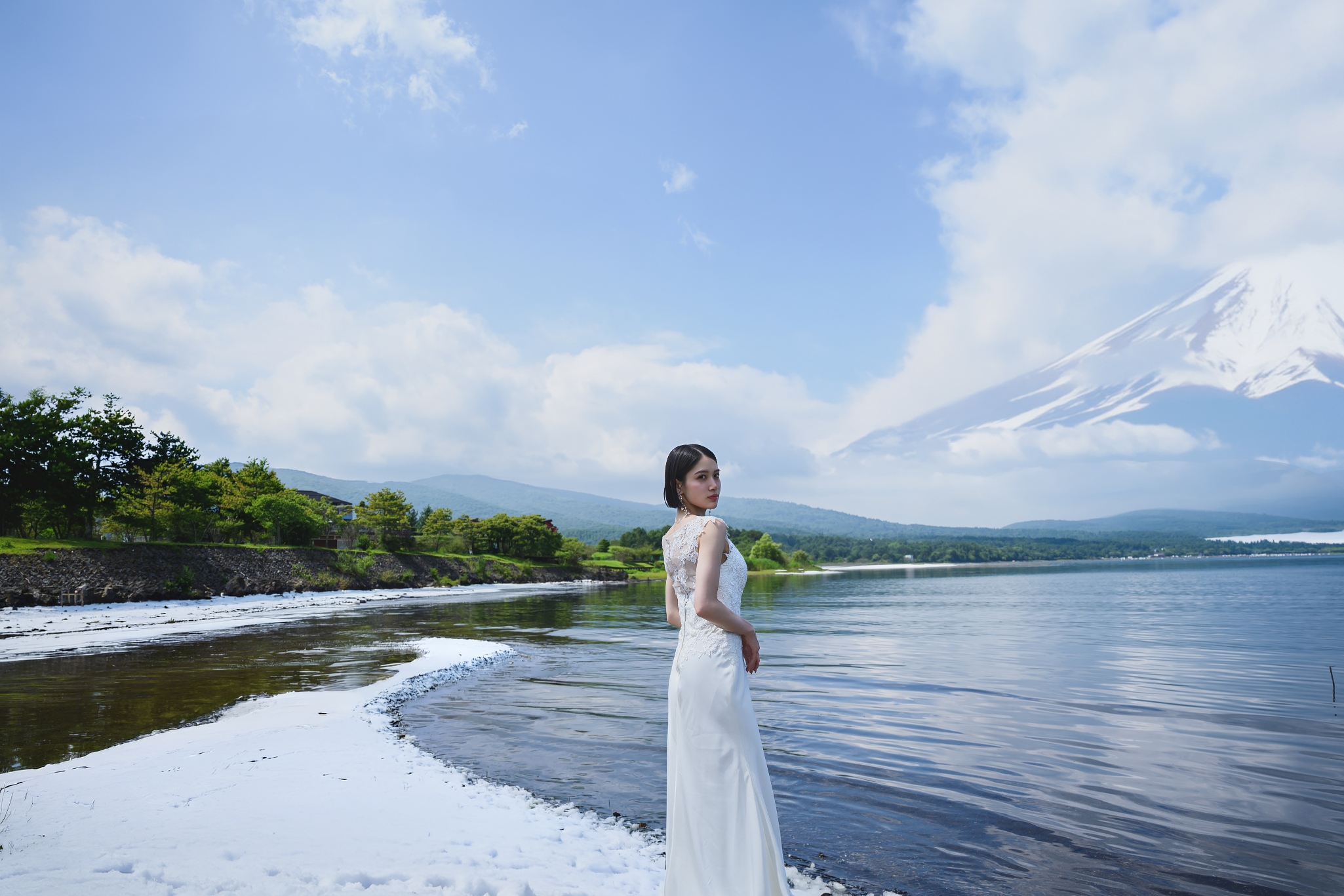
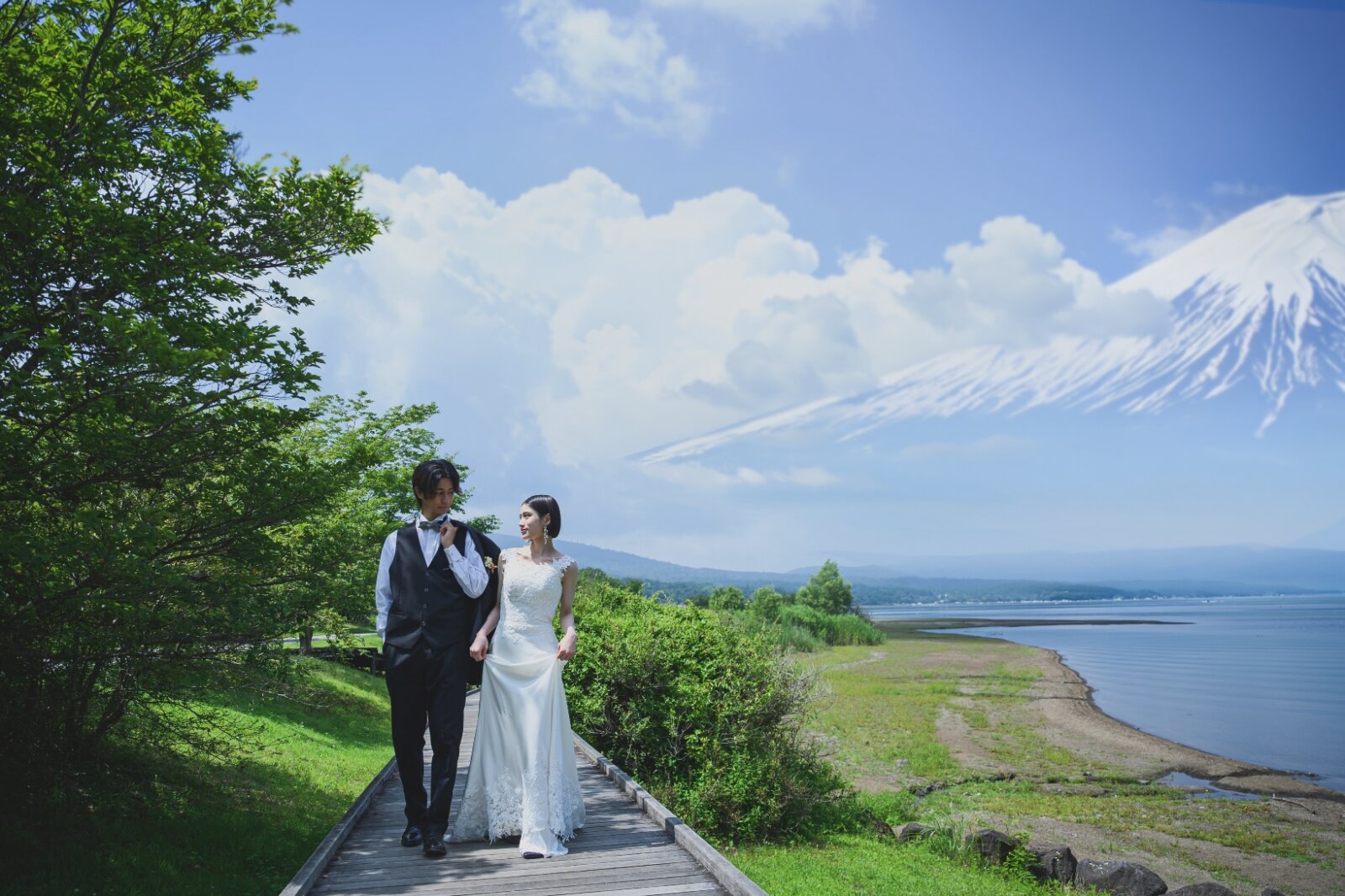
A dress with an open back or bare shoulders leaves little room for layers underneath. If you are shooting in a cold month, tell our stylist at the fitting that you are shooting Mt. Fuji and they will suggest designs and ways of layering that suit the season.
Adhesive heat packs work well at the waist or stomach, where they do not show through the line of the dress. Feet get surprisingly cold, so warm socks and comfortable shoes for the drive, which you change out of for the photos, make a big difference.
Staying warm in a kimono
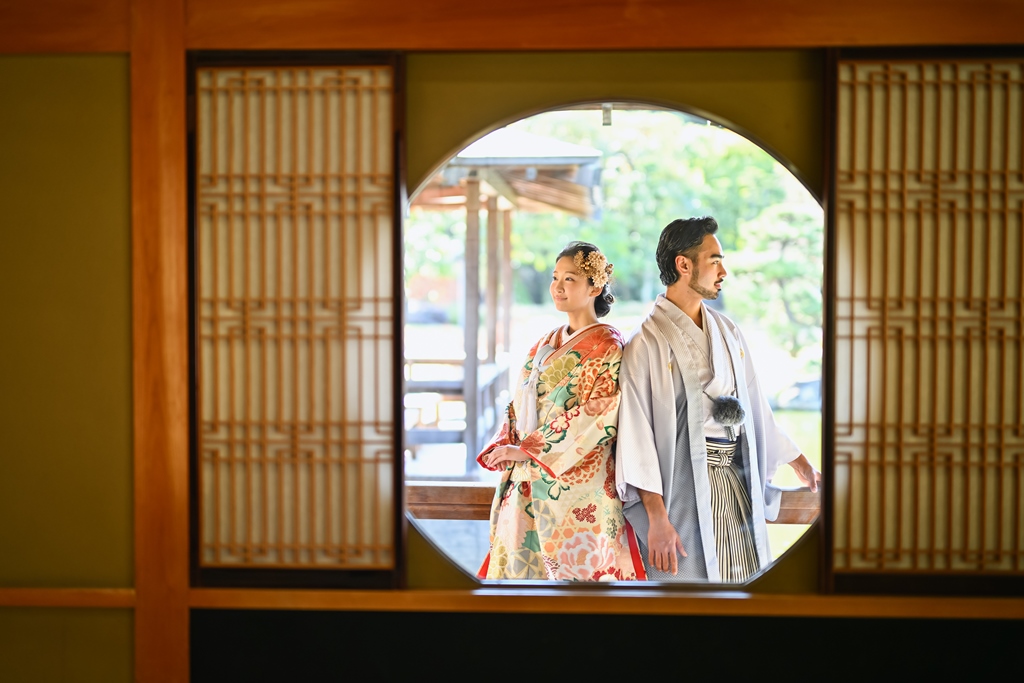
A kimono is worn in several layers and keeps you warmer than a dress. Even so, the cold can reach you through the tabi socks and at the collar. During the drive keep your neck warm with a shawl, and you will look relaxed in the photos.
Grooms, too
On the Mt. Fuji tour many shots are taken with the jacket off, in waistcoat and shirt. Put the jacket back on between shots and keep your body temperature up.
For a winter shoot, read Winter at Mt. Fuji as well.
What to bring
- A front-opening layer (cardigan or coat)
- A large shawl or lap blanket
- Adhesive heat packs
- Warm socks and comfortable shoes for walking
- Sunscreen: at this altitude the sun feels strong on a clear day
- A flask of something warm
Where to meet and the hour-by-hour schedule are in Your Mt. Fuji photoshoot day.
Questions about the cold
How much colder is Lake Yamanaka than Tokyo?
At about 1,000 m, roughly 5–6°C cooler than central Tokyo.
How should we choose a dress for a cold month?
Tell our stylist at the fitting that you are shooting Mt. Fuji. They will suggest designs and layers that suit the season.
Where do the heat packs go?
At the waist or stomach, where they do not show through the line of the outfit.
Do we need a layer in summer?
Mornings and evenings can feel cool even in summer, so a light layer is worth bringing.
Can we leave our coats somewhere during the shoot?
Yes. Our attendant holds your coat and shawl between shots and they stay in the car while you are in front of the camera.
Ask us about your Mt. Fuji photoshoot
Send your travel dates and the look you have in mind. We reply in English by email, with no obligation.