Mt. Fuji is clearest from November to February; the flower fields peak from mid-July to early October. Here is how to choose the season that gives you the photos you want.
Once you start planning a Mt. Fuji photoshoot, the first question is usually "when?". The mountain's visibility changes dramatically through the year, and the flower fields at its foot change from month to month. This guide puts the two together, using long-term weather records and the bloom calendar of Hana no Miyako Park, so you can pick the season that matches the photos you want.
The short answer: if you want Mt. Fuji sharp and snow-capped, come between November and February. If you want flower fields in the frame, come between mid-July and early October. Whatever you choose, our Mt. Fuji Special Retouch covers you if the summit hides on the day.
Mt. Fuji is clearest from November to February
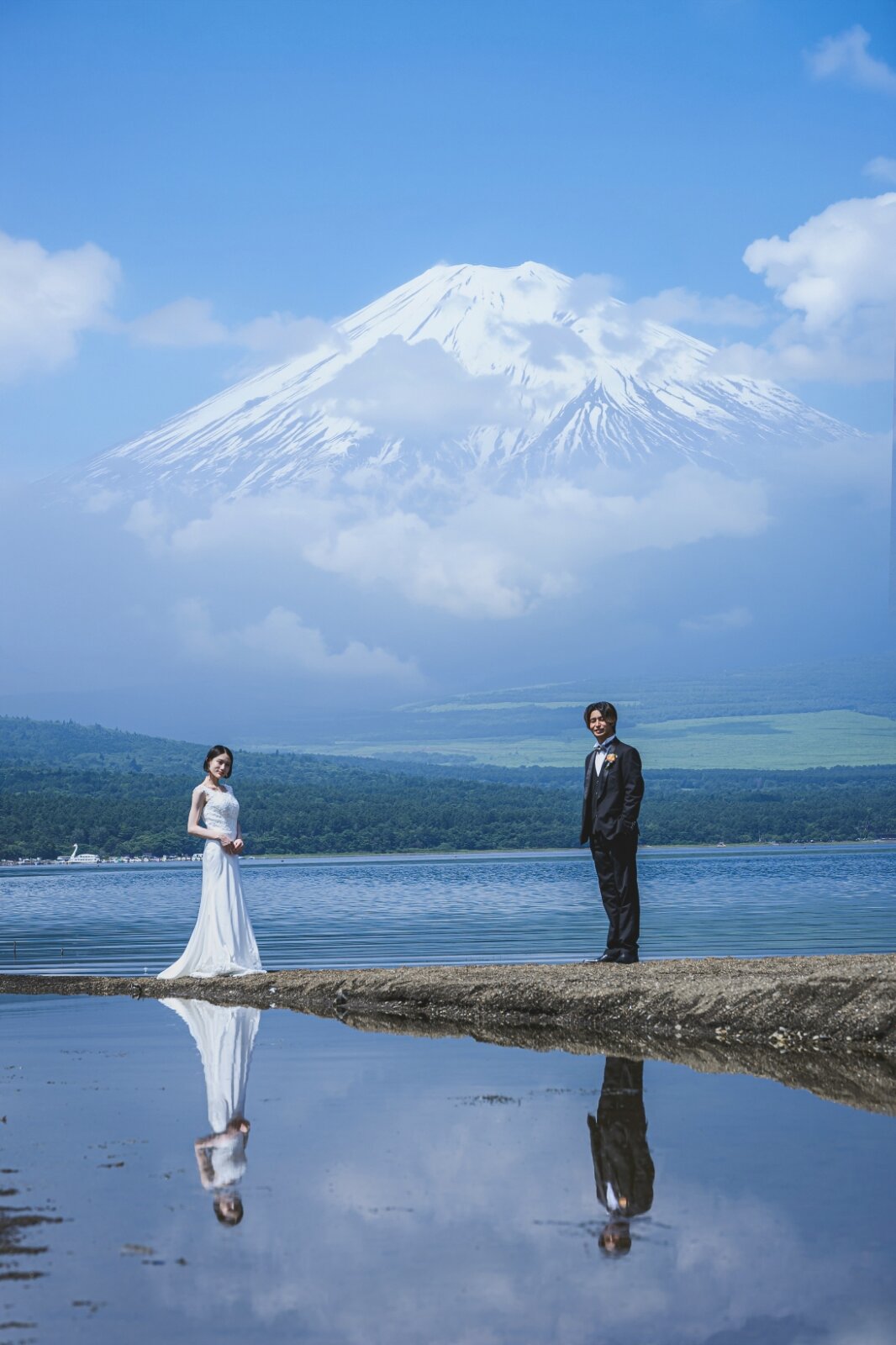
Fuji City, at the southern foot of the mountain, has recorded whether Mt. Fuji is visible at 8 a.m. every day for 35 years. The whole mountain was visible on about 62% of days in December and about 60% in January. In summer the picture is very different: about 12% in June, 10% in July and 15% in August.
The reason is the wind. In winter a dry wind blows from the mountain towards the sea, and clouds rarely form on Fuji. In summer moist air comes in from the sea, hits the mountain and builds cloud, so there are few days when the summit stays clear all day. The same records show that mornings are better than afternoons in every season: as the day warms up, cloud tends to build.
| Month | Days with the whole mountain visible (8 a.m.) |
|---|---|
| December | about 62% |
| January | about 60% |
| June | about 12% |
| July | about 10% |
| August | about 15% |
Source: Fuji City's daily observation record. Lake Yamanaka, where we shoot, is on the north-eastern side of the mountain, so local conditions vary, but the seasonal pattern is the same.
What each season looks like
Spring (April to May)
At Hana no Miyako Park, tulips peak from late April to early May, and you can photograph spring flowers with snow still on the summit. From early May to early June, nemophila carpets the park's Seiryu no Sato area in blue. Spring haze is common, so the outline of the mountain can look soft on some days.
Summer (June to August)
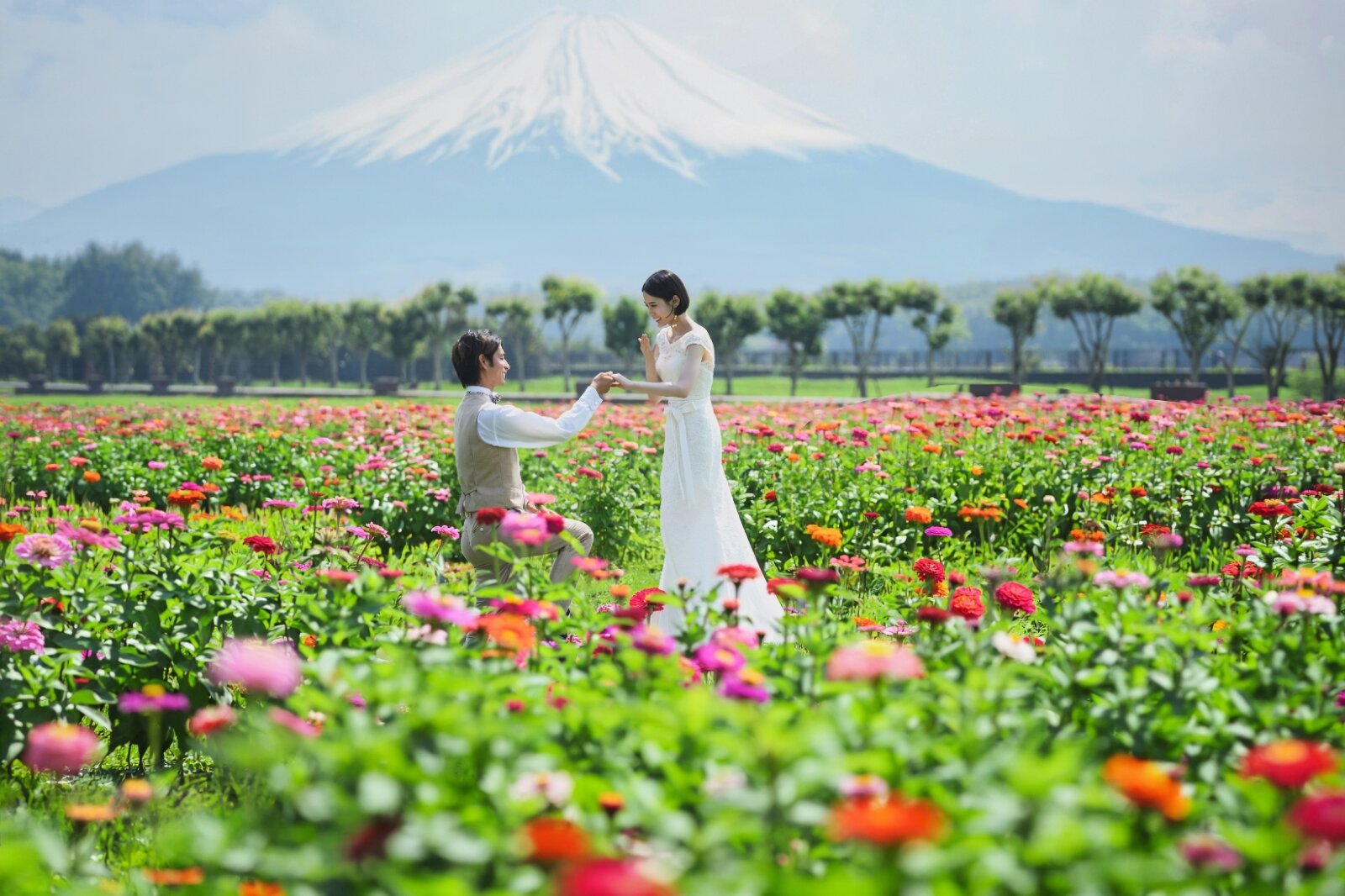
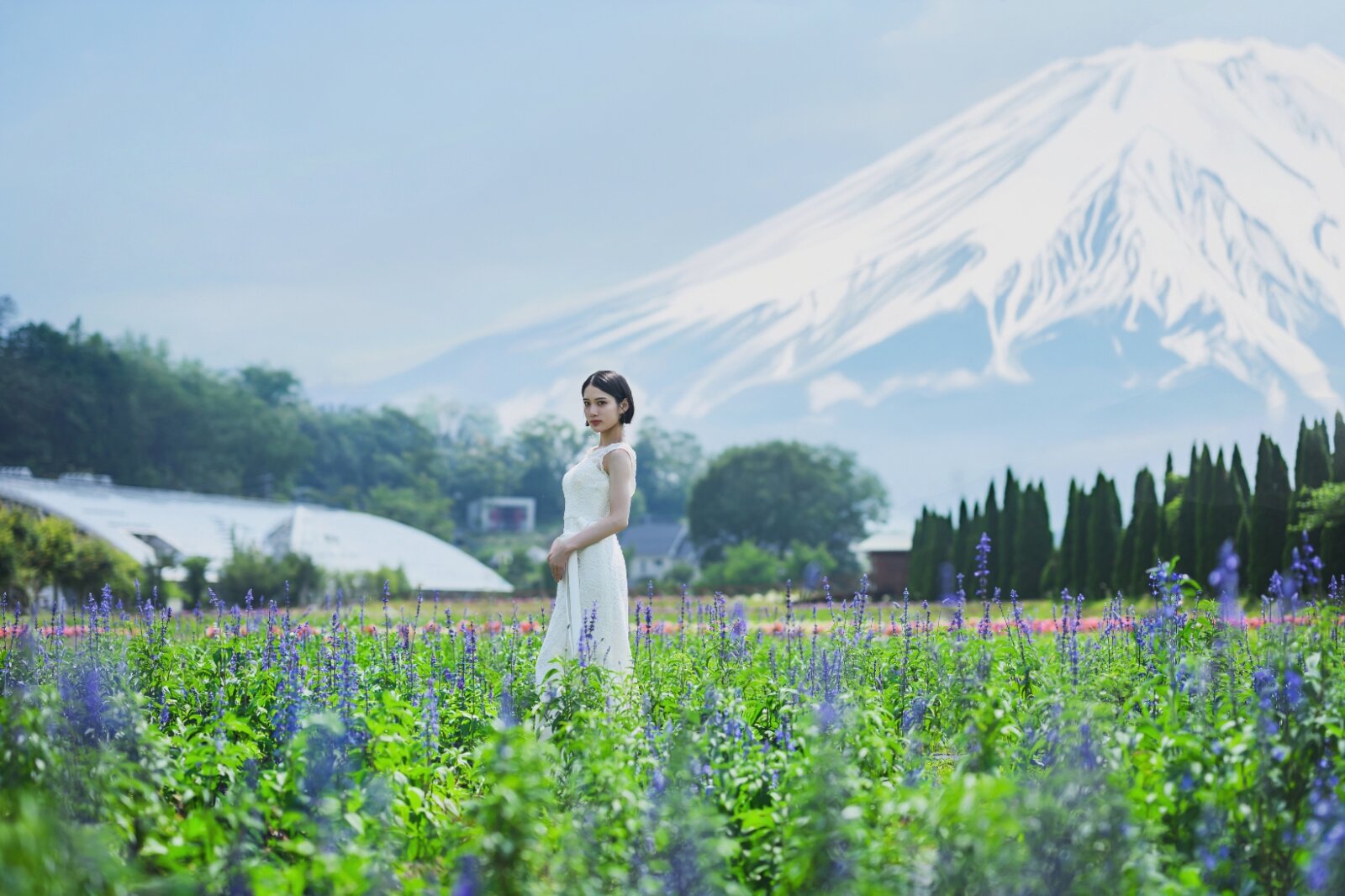
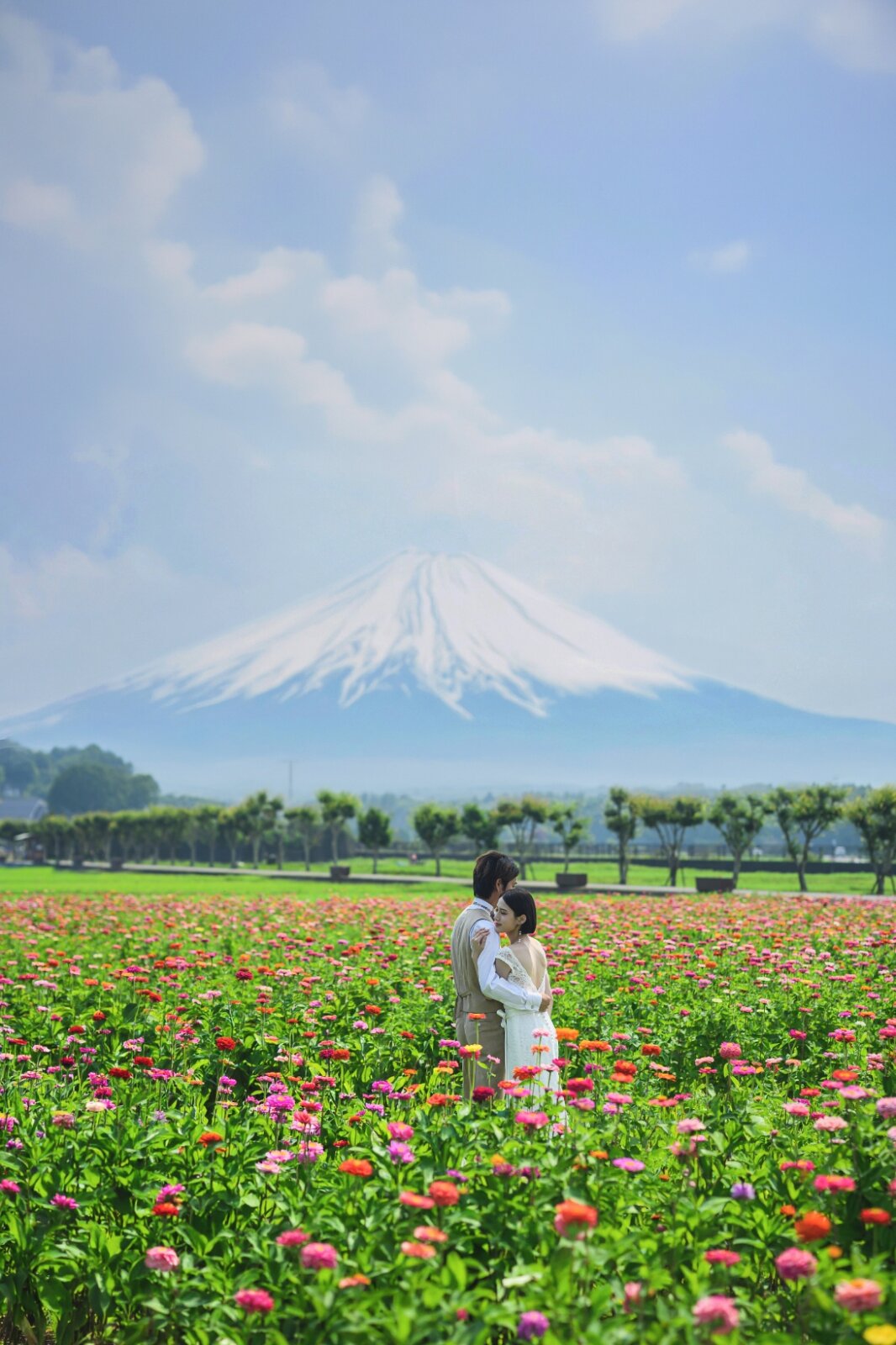
Zinnias start to bloom in mid-July and sunflowers peak in mid to late August. The trees are deep green, and the lakeshore and the willow path feel lush and fresh. Cloud forms on Mt. Fuji most often in this season, so we often work with the gaps between clouds, and the Special Retouch is used most.
Autumn (September to November)
Cosmos bloom from late August to mid-October, and zinnias continue until early October. From October the number of clear days rises. Around Lake Yamanaka the leaves usually turn in early November, and that is the only time of year you can put autumn colour and Mt. Fuji in the same frame. Mornings and evenings are cold by then, so plan a warm layer.
Winter (December to February)
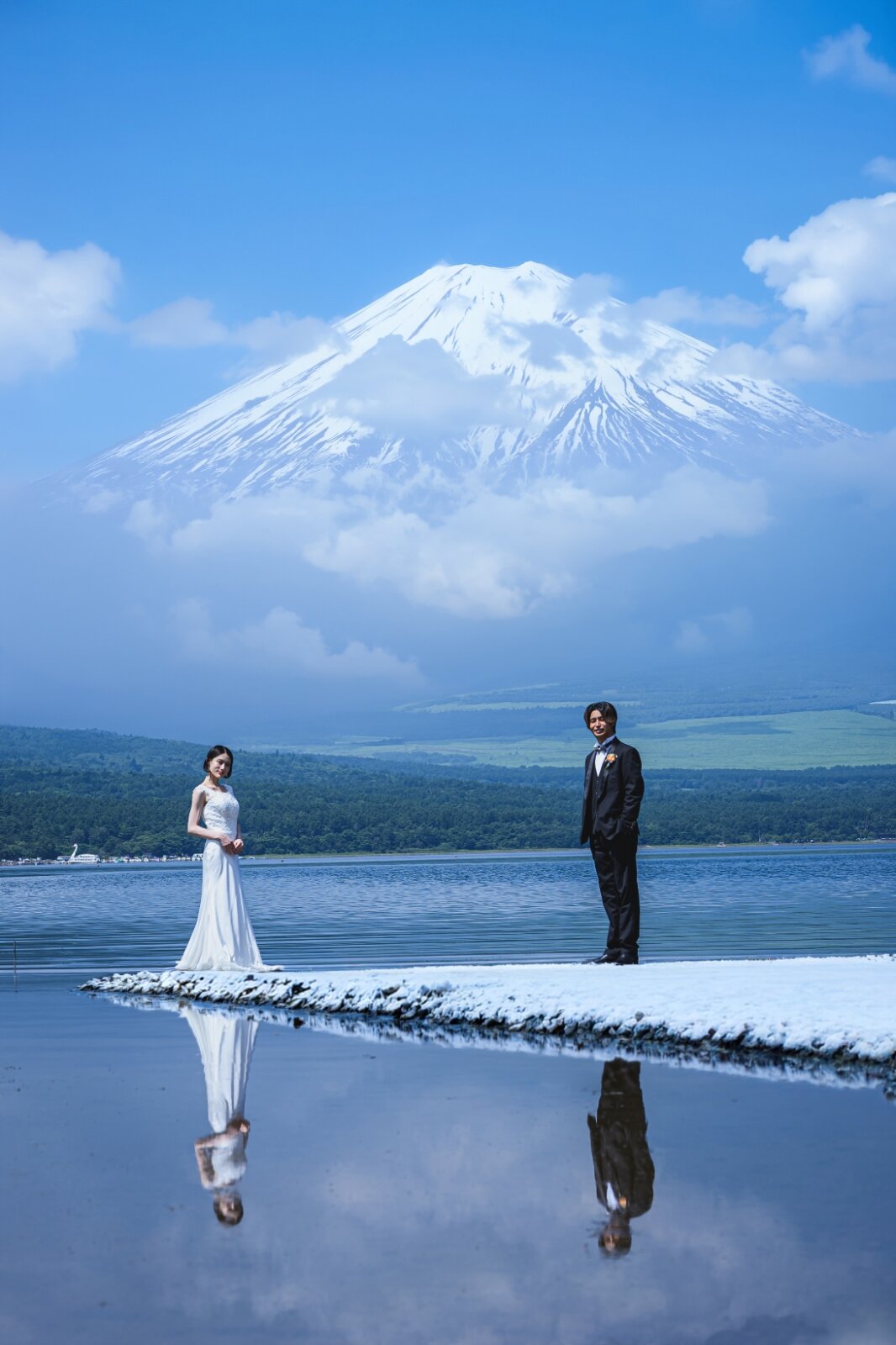
The clearest season of the year, with a snow-covered summit and crisp air that shows every ridge of the mountain. There are no flowers in the fields, so we shoot along the lakeshore and the boardwalk instead. The tour runs all winter. It is also the coldest time of year; our FAQ has tips on what to bring.
Season comparison
| Season | Mt. Fuji visibility | Main flowers at Hana no Miyako Park | Highlights |
|---|---|---|---|
| Spring (Apr–May) | Some hazy days | Tulips (late Apr–early May), nemophila (early May–early Jun) | Spring flowers with snow on the summit |
| Early summer (Jun–Jul) | Often cloudy | Mustard flowers, poppies, baby's breath | The widest variety of flowers |
| Summer (Jul–Aug) | Few clear days | Zinnias, sunflowers | Deep green, fresh atmosphere |
| Autumn (Sep–Nov) | Clear days increase from October | Cosmos, zinnias (to early Oct) | Autumn colour in early November |
| Winter (Dec–Feb) | Clearest of the year | Few flowers | Snow-capped Fuji and crisp air |
How to choose if you are undecided
| If you want… | Best time | Why |
|---|---|---|
| Mt. Fuji as the star of the photo | November to February | Most clear days, snow on the summit |
| Flower fields and Mt. Fuji together | Late September to October | Cosmos and zinnias in bloom, clear days increasing |
| Autumn colour | Early November | Peak foliage around Lake Yamanaka |
| Fresh green, summery photos | June to August | Lush trees; Fuji is often in cloud, so count on the retouch |
| Cherry blossom | — | Our tour locations are not cherry blossom spots; ask us about our studios in Tokyo and Nagoya for sakura photos |
Bloom and foliage dates move with each year's weather. As your date approaches we tell you what is in flower, and on the day we choose the spots that look best.
If Mt. Fuji does not appear
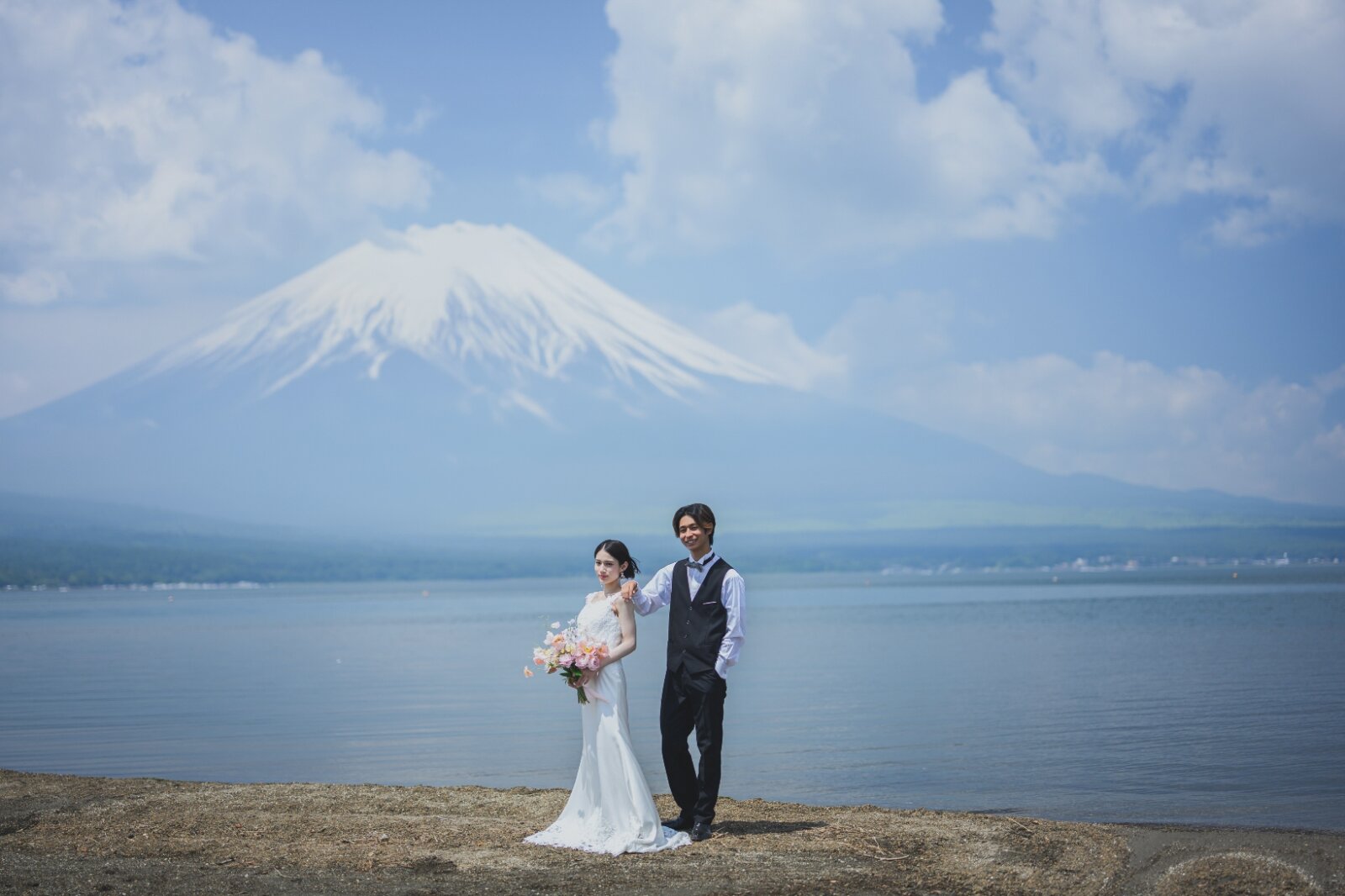
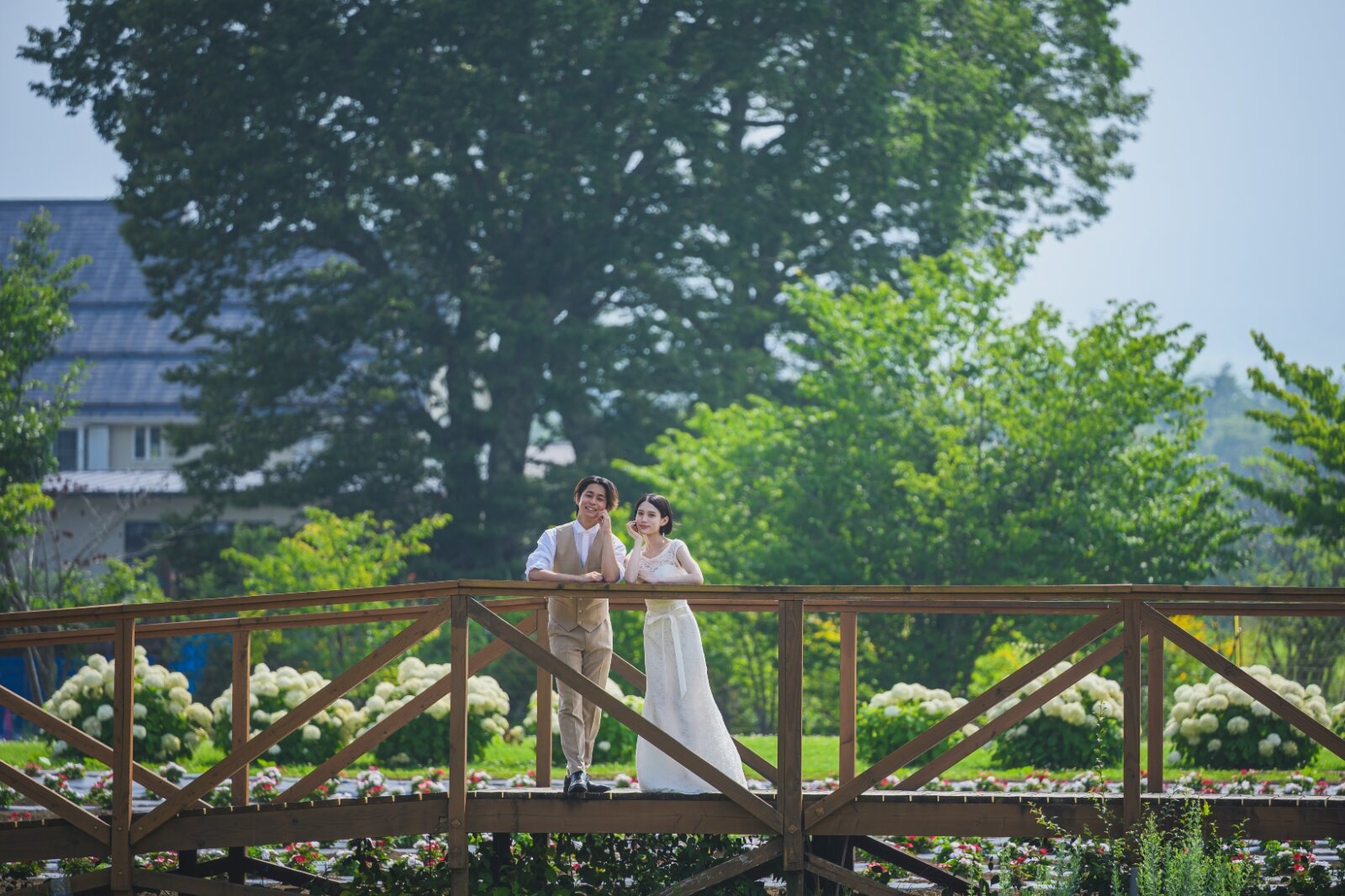
In any season there is a chance that clouds cover the mountain on your day. Every Mt. Fuji tour includes the Mt. Fuji Special Retouch: we retouch your favourite 10 photos so the mountain appears as it would have on a clear day, free of charge. We can even give a summer photo a snow-capped Fuji. Read more in What if Mt. Fuji is hidden by clouds?
The spots we shoot in each season are shown with photos on the 7 photo spots page.
Questions about choosing a season
Which season do you recommend most?
For a sharp Mt. Fuji, November to February. For flowers, mid-July to early October. Decide which matters more to you and the choice follows.
When can we photograph autumn leaves with Mt. Fuji?
Around Lake Yamanaka the foliage usually peaks in early November. It shifts a little each year with the weather.
Will Mt. Fuji be in our summer photos?
Summer is the cloudiest season on the mountain. If it is hidden, the Special Retouch brings it back into your favourite 10 photos at no charge.
Do you run the tour in winter?
Yes, the tour runs from December to February. It is the clearest season of the year.
Is Japan's rainy season a problem?
June to mid-July is the rainy season in this part of Japan. Rain days can be rescheduled free of charge, and the flowers and greenery are at their best, but clear views of the summit are rare.
Ask us about your Mt. Fuji photoshoot
Send your travel dates and the look you have in mind. We reply in English by email, with no obligation.